Why the Dutch Cycle Everywhere: The Surprising History Behind the World's Cycling Capital
When you picture the Netherlands, chances are you imagine windmills, tulips, and thousands of people cycling through narrow streets without helmets, cargo bikes loaded with groceries and children, and bike parking structures larger than some train stations.
But here's the question most visitors never ask: Why do the Dutch cycle so much?
The easy answer—"because it's flat"—is only part of the story. Denmark is flat. Belgium is flat. Yet neither country comes close to the Netherlands' cycling rates. The real answer is far more interesting: Dutch cycling culture is the product of history, crisis, political choice, and decades of infrastructure investment that made the bicycle the most rational way to move through cities.
Let's trace the journey from early adoption to near-extinction to deliberate revival—and understand whether Dutch people cycle today out of choice, need, or both.
The Early Years: When Bicycles First Conquered Dutch Roads
To understand modern Dutch cycling, you need to rewind to the late 19th and early 20th centuries, when bicycles first spread across Europe and quickly became woven into daily Dutch life.
Why bikes caught on so fast
The Netherlands' flat landscape and compact towns made bicycles practical and efficient from day one. Unlike hilly regions where cycling required serious physical effort, Dutch terrain allowed almost anyone—children, elderly people, workers in formal clothes—to ride comfortably without breaking a sweat.
By the 1920s and 1930s, cycling had already become a dominant mode of transport, not just recreation. This early mass adoption created a strong cycling culture before cars became affordable for average families, which would prove crucial decades later.
The bicycle tax: paying for infrastructure
Here's a fascinating detail most people don't know: in the 1920s, the Dutch government introduced a specific bicycle tax to help finance road construction. Why? There simply weren't enough car owners yet to fund road building through motor vehicle taxes alone.
Cyclists were effectively paying for new roads, and engineers considered it unfair that these taxpayers couldn't use car roads safely. This thinking accelerated the construction of separate bicycle paths alongside major routes—an early network that made cycling safer and helped it remain a serious transport option even as cars slowly became more common.
This infrastructure foundation would become critically important when the country faced a crossroads in the 1970s.
The Post-War Car Boom: When Cycling Nearly Disappeared
After World War II, the Netherlands initially embraced automobiles just like other Western nations. Cities began redesigning streets and squares for motor traffic and parking. The future, it seemed, belonged to cars.
The dark years for cycling
In the 1950s and 1960s, car ownership skyrocketed. In many European countries, bicycles practically vanished from daily transport, replaced almost entirely by automobiles. Dutch cycling rates also plummeted during this period as:
- Roads were widened for cars
- Streets were reshaped around motor traffic
- Policy and investment heavily favored vehicles over bikes
It looked like the Netherlands would follow the same car-centric path as the United States, Britain, and most of Western Europe.
But two crucial differences remained
Even at the lowest point of car dominance, the Netherlands retained advantages that would later prove decisive:
1. Cycling never fully vanished
Around one-fifth of journeys continued to be made by bike, so the habit never completely died out. This was far higher than neighboring countries.
2. Cultural memory persisted
The early network of bicycle paths and the image of cycling as "typically Dutch" kept bikes visible and culturally acceptable, even when planning orthodoxy centered on cars.
This meant that when serious problems emerged, there was already a social base that could imagine returning to cycling—not as nostalgia, but as a practical solution.
The 1970s Turning Point: Crisis, Death, and Revolution
The transformation that created modern Dutch cycling culture happened remarkably quickly, driven by two converging crises that forced the nation to reconsider its car-centric trajectory.
"Stop de Kindermoord": The movement that changed everything
In the early 1970s, traffic deaths in the Netherlands reached a horrifying peak. In 1971 alone, more than 3,000 people died in traffic accidents—and over 400 of them were children.
Parents and citizens mobilized in outrage, launching campaigns with a name that still echoes today: "Stop de Kindermoord" ("Stop the Child Murder"). These weren't fringe activists; they were ordinary families linking child deaths directly to car-centric planning and demanding safer streets.
The movement organized:
- Protests and demonstrations in cities across the country
- Public awareness campaigns showing the human cost of car dominance
- Direct pressure on politicians to redesign dangerous intersections and streets
Crucially, they didn't just shout from the sidelines—they participated in the Dutch "polder model" of consensus-based decision-making, where activists, engineers, local politicians, and interest groups negotiated solutions together.
The oil crisis: making the economic case
At almost the same moment, the 1973-1974 oil embargo hit. Fuel became scarce and expensive. The Dutch government instituted car-free Sundays, and suddenly people experienced what cities could feel like without continuous motor traffic:
- Quiet streets safe for children to play
- Families cycling together without fear
- Public space reclaimed from parked cars
These car-free days were intended as emergency measures, but they became powerful demonstrations of an alternative future. People could see—and feel—that another way was possible.
From moral imperative to policy revolution
The combination of child safety concerns and energy insecurity created both a moral and economic imperative to change direction. The Dutch government's response was systematic:
- Cut oil dependence without sacrificing quality of life
- Invest in energy-efficient, affordable transport modes
- Redesign infrastructure around safety and livability
Cycling fit perfectly into this strategy. It was:
- Affordable for all income levels
- Energy-efficient and sustainable
- Safer when given proper infrastructure
- Already part of Dutch cultural memory
Building the System: How Infrastructure Creates Behavior
The Netherlands didn't just paint some bike lanes and hope for the best. Over the following decades, the country built one of the most sophisticated cycling networks in the world through coordinated investment at every level of government.
What was actually built
The transformation included:
Separated cycle paths: Tens of thousands of kilometers of dedicated bike infrastructure, physically separated from both cars and pedestrians
Bike-friendly intersections: Traffic lights timed for cycling speeds, dedicated signals, and protected crossing zones
Traffic-calmed neighborhoods: Residential areas with 30 km/h speed limits and street designs that naturally slow cars
Bike parking: Massive facilities at train stations, city centers, and major destinations—some holding thousands of bikes
Integration with public transport: Trains designed to accommodate bikes, allowing longer-distance cycling commutes
The result: rational cycling
This infrastructure didn't just make cycling possible—it made it the most rational choice for many trips. In dense cities like Amsterdam, Utrecht, and Groningen:
- Bikes are often faster than cars for short to medium distances
- Parking a bike is easier and cheaper than parking a car
- Cycling doesn't require waiting for buses or dealing with traffic jams
- Safe routes exist for riders of all ages and abilities
The system works so well that many Dutch people who own cars still choose bikes for daily errands, commuting, and social visits.
Choice or Need? Understanding Dutch Cycling Today
So do Dutch people cycle because they want to or because they have to? The answer is: both, and that's the genius of the system.
Cycling as choice
For many trips, the bicycle is simply the easiest, quickest, and most convenient option. The infrastructure makes it:
- Faster: No traffic jams, direct routes, easy parking
- Cheaper: No fuel, minimal maintenance, no parking fees
- Healthier: Built-in exercise without gym memberships
- Pleasant: Safe, predictable, often scenic routes
When cycling is genuinely the best option, people choose it freely—not because they're environmentally virtuous or athletically inclined, but because it makes practical sense.
Cycling as necessity
At the same time, there's a strong element of need:
For households: Relying solely on cars in Dutch cities would be expensive, inefficient, and incompatible with limited urban space
For the transport system: Public transport is partly designed around feeder trips by bicycle, assuming people will bike to train stations
For urban planning: Schools, shops, and workplaces are located with the assumption that many people arrive by bike
For sustainability goals: Dutch climate commitments and air quality targets require cycling as necessary infrastructure
The everyday reality
You see this blend everywhere:
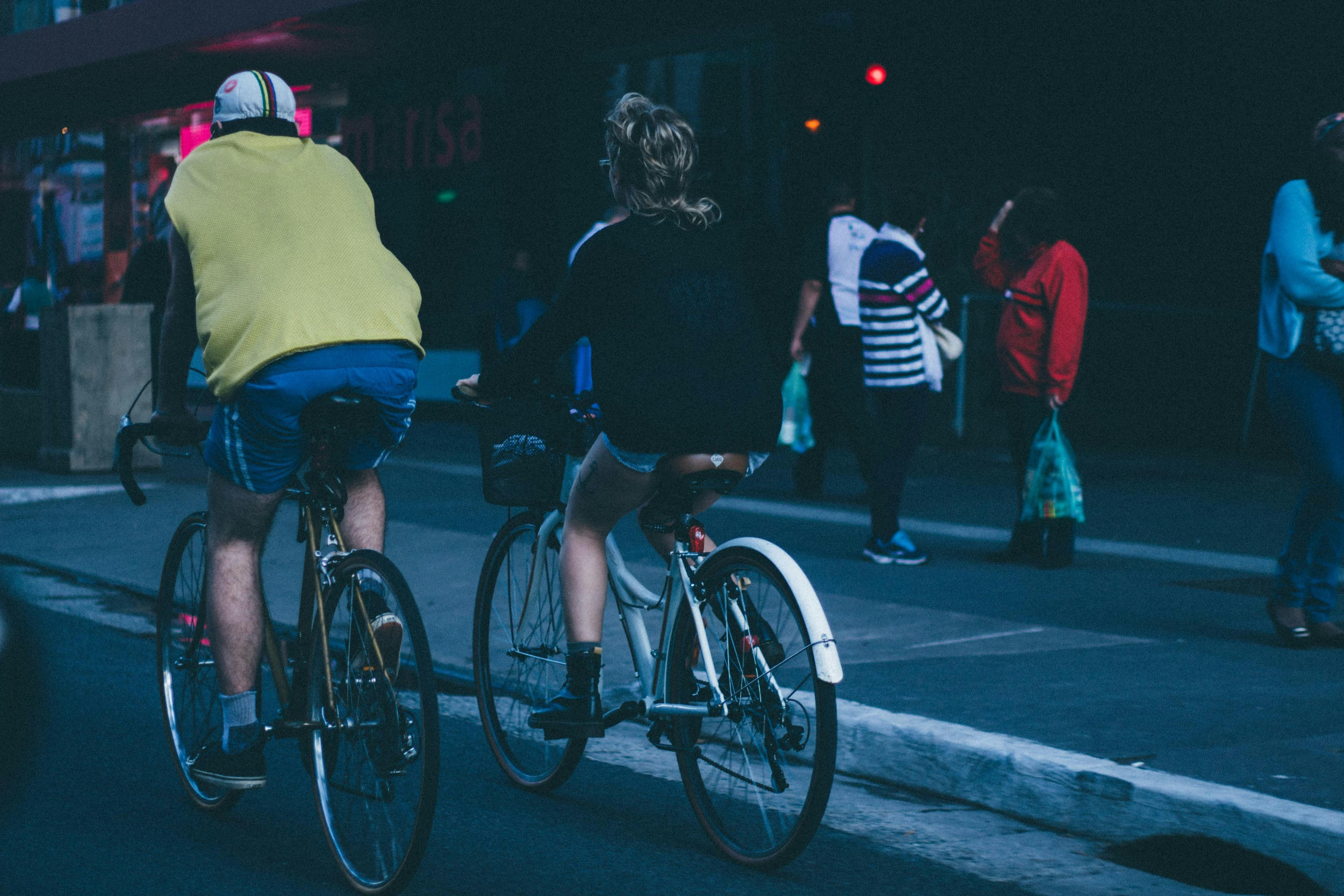
- Parents transporting multiple children in cargo bikes
- Elderly people cycling to medical appointments
- Students commuting long distances to universities
- Workers combining bike rides with trains for regional travel
For most of these people, cycling isn't a lifestyle statement or environmental crusade. It's a normal, expected part of life that keeps daily routines affordable, predictable, and time-efficient.
Paradoxically, once you live in such a system, choosing not to cycle can feel like a constraint, because routes, parking, and schedules are optimized around bikes rather than cars.
The Historical Reason: Why It Ended Up This Way
Here's the complete picture of why the Netherlands became the world's cycling capital:
The sequence that mattered
-
Early foundation (1900s-1940s): Bicycles became central to Dutch mobility before cars, supported by infrastructure investments including paths financed partly by a bicycle tax
-
Car dominance (1950s-1960s): The Netherlands nearly followed the car-centric path of other Western nations, but cycling never fully disappeared
-
Crisis and choice (1970s): The "Stop de Kindermoord" movement and oil crisis created moral and economic pressure to reverse course
-
Political consensus (1970s-present): Dutch consensus politics transformed public demand into long-term infrastructure investment
-
Reinforcing cycle: Better infrastructure made cycling more attractive, which justified more investment, which increased cycling rates further
Not geography, but choice
Dutch cycling is not primarily about flat terrain—it's about deliberate, sometimes contested political and planning choices that made the bicycle central to transport policy.
Those choices have, over time, made cycling feel both voluntary and necessary:
- Voluntary because the system offers real alternatives and makes cycling genuinely attractive
- Necessary because the entire urban and transport fabric is now built around the bike as a core mode of movement
Lessons for Other Countries
Can other places replicate Dutch cycling success? The history suggests yes—but it requires more than painting bike lanes.
What the Dutch example teaches us
Infrastructure creates behavior: When cycling is safe, convenient, and fast, people choose it naturally
Crisis can catalyze change: The oil embargo and child safety movement created political space for transformation
Consensus matters: Involving multiple stakeholders—activists, engineers, politicians, citizens—built lasting support
Time and consistency count: The Netherlands has been investing in cycling infrastructure for 50 years
It's not all-or-nothing: You don't need to ban cars; you need to give bikes equal (or better) infrastructure
The challenge for car-dependent places
Cities built around cars face genuine obstacles:
- Existing infrastructure favors driving
- Land use patterns assume car access
- Political resistance from drivers
- Lack of cycling culture or expertise
But the Dutch experience shows these obstacles aren't insurmountable. The Netherlands was heading down the same car-centric path in the 1960s—and reversed course through political will and smart investment.
FAQ: Dutch Cycling Culture Explained
1. Is Dutch cycling culture really just because the country is flat?
No. While flat terrain helped early adoption, many flat countries don't have high cycling rates. Dutch cycling is primarily the result of infrastructure investment and political choices.
2. Do Dutch people wear helmets when cycling?
Generally no. The excellent infrastructure makes cycling safe enough that helmets aren't considered necessary for everyday trips. This is a point of ongoing debate.
3. How much did the Netherlands spend on cycling infrastructure?
The Netherlands invests approximately €30-40 per person annually on cycling infrastructure, compared to much larger investments in road infrastructure.
4. Can cities in other countries realistically copy this model?
Yes, but it requires sustained political commitment, significant investment, and typically 10-20 years to see transformative results. Cities like Copenhagen and some areas of London and Paris are successfully adapting Dutch principles.
5. What percentage of Dutch trips are made by bicycle?
Approximately 27% of all trips in the Netherlands are made by bicycle—rising to over 40% in cities like Amsterdam and Groningen.
6. Do Dutch people cycle in winter and rain?
Yes. The infrastructure and cycling culture make year-round cycling practical. The saying goes: "There's no bad weather, only bad clothing."
The Dutch didn't stumble into cycling by geographic luck. They built it through crisis, protest, political consensus, and fifty years of sustained investment in infrastructure that makes the bicycle the most rational choice for millions of daily trips.
The lesson isn't that cycling works in the Netherlands because Dutch people are different. It's that infrastructure shapes behavior—and when you build cities for bikes, people ride them.
Whether your city is flat or hilly, large or small, car-dependent or transit-oriented, the Dutch example offers a roadmap: invest in safety, create separated infrastructure, integrate cycling with other transport modes, and give it time to become normal.
The transformation won't happen overnight. But it can happen—because it already has.
About the Author
Studio Citylines Urban Mobility Desk
Certified Fitness Professional & Nutrition Specialist
Expert fitness professional with over 10 years of experience helping people achieve their health and fitness goals through evidence-based training and nutrition. Certified by ACSM and NASM with specializations in weight management and sports performance.